Engagement rings · 4 minute read · Updated November 2026
Yellow, white or rose gold, or platinum
Yellow, white and rose gold and platinum compared for engagement rings and bands: color, wear, price and care.
Book a bridal consultation
A ring's metal sets its color, its weight, how it wears and what it costs. The four choices for engagement rings and bands are yellow gold, white gold, rose gold and platinum. They are all good choices; they suit different hands and different lives. This guide compares them.
Karat: 14K and 18K
Pure gold is 24 karat and too soft for a ring, so jewelry gold is an alloy. 14K is 58.3 percent gold; 18K is 75 percent gold. The rest is other metals, and those other metals give yellow, white and rose gold their colors.
14K is harder and resists scratches and bending better, which is why most everyday rings are 14K. 18K has a deeper, warmer color, is softer, and costs more because it holds more gold. On a thin band or a ring with small prongs, 14K holds its shape longer.
Most rings in our case are 14K, with 18K on some pieces and platinum on a few. The metal is listed on every product page.
Yellow gold
The classic. Yellow gold is gold alloyed with copper and silver, and its color is the color of the gold itself, so it never needs plating and only needs polishing. It warms the look of a diamond, which hides a faint tint in a near-colorless stone, and it suits warm skin tones.
It scratches more easily than platinum and shows wear as a soft shine. A polish at the bench brings it back. See yellow gold rings.
White gold
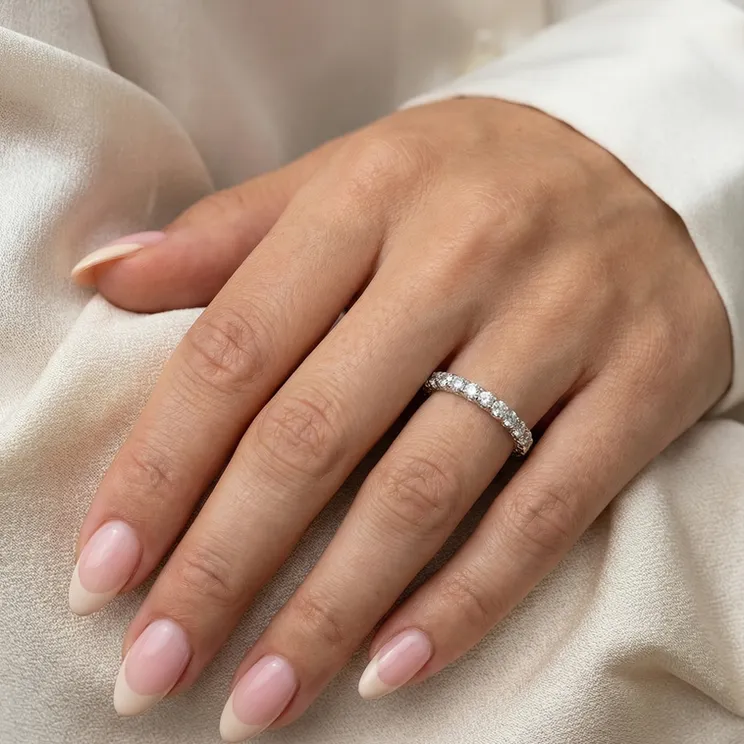
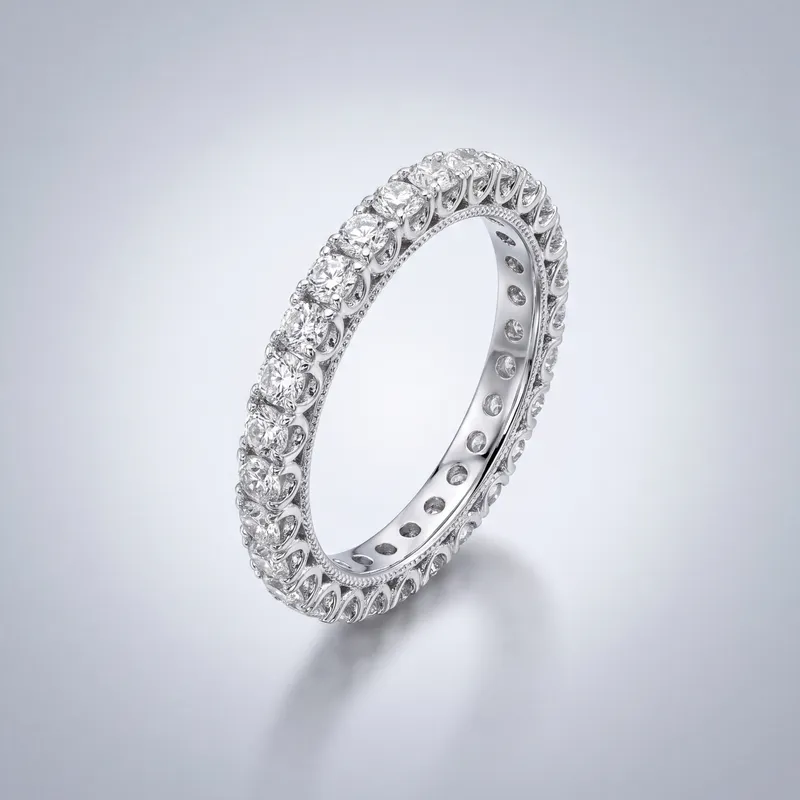
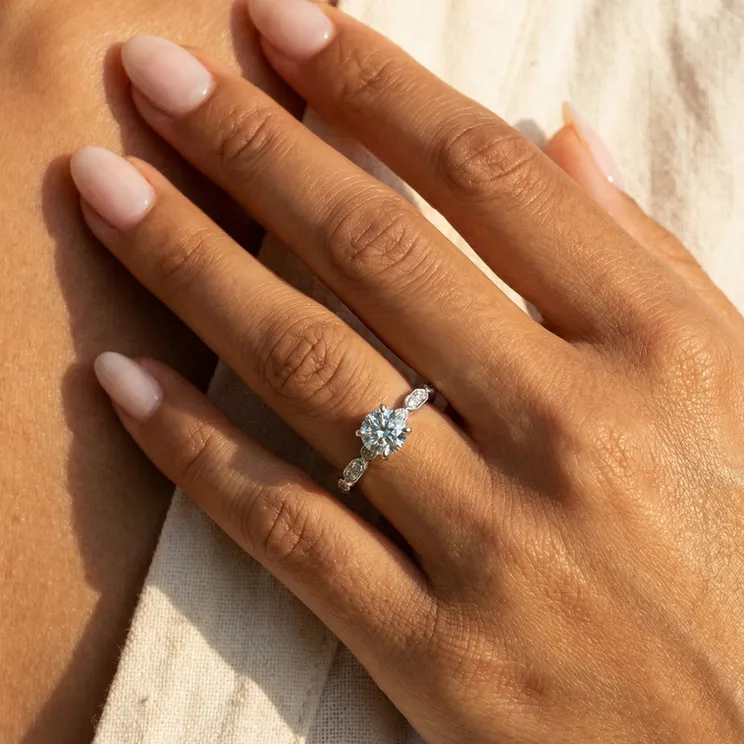
White gold is gold alloyed with white metals such as palladium, nickel or silver, then plated with rhodium, a hard bright white metal from the platinum family. The rhodium gives white gold its mirror finish and makes a white diamond look whiter.
Rhodium is thin, and it wears through where the ring rubs, more quickly on the underside of the band. When it does, the warmer alloy shows. Replating restores the white. White gold rings bought at Geraci come with free rhodium plating, up to once a year, for life, as part of the Geraci Guarantee.
Some white gold alloys contain nickel, which can bother sensitive skin. A nickel-free white gold is available for a custom ring. See white gold rings.
Rose gold
Rose gold is gold alloyed with more copper, which gives the pink color. The more copper, the pinker: 14K rose gold is pinker than 18K. Like yellow gold, the color is the metal's own and never needs plating.
Copper makes rose gold slightly harder than yellow gold of the same karat. It suits most skin tones, pairs well with white and yellow gold in a stack, and warms diamonds and pink stones. See rose gold rings.
Platinum
Platinum jewelry is usually 95 percent platinum, marked 950 or Plat. It is naturally white, so it never needs plating, and it is denser than gold: the same ring weighs more in platinum and feels it on the hand.
Platinum does not wear away when scratched; the metal moves rather than leaving, so a platinum ring develops a soft satin patina over the years and can be polished back to bright. Its prongs hold stones more securely over time than gold prongs, which is why platinum is the choice for a large or valuable center stone. It costs more than gold. See platinum rings.
Choose the metal for the hand that wears it, not for the diamond. Every one of the four makes a well-cut diamond look good.
Mixing metals
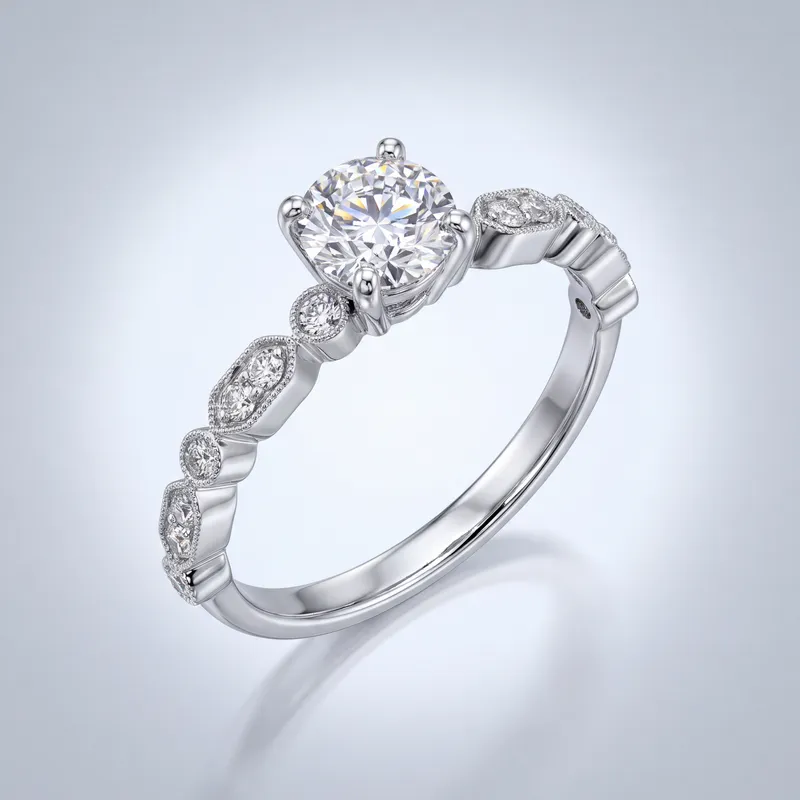
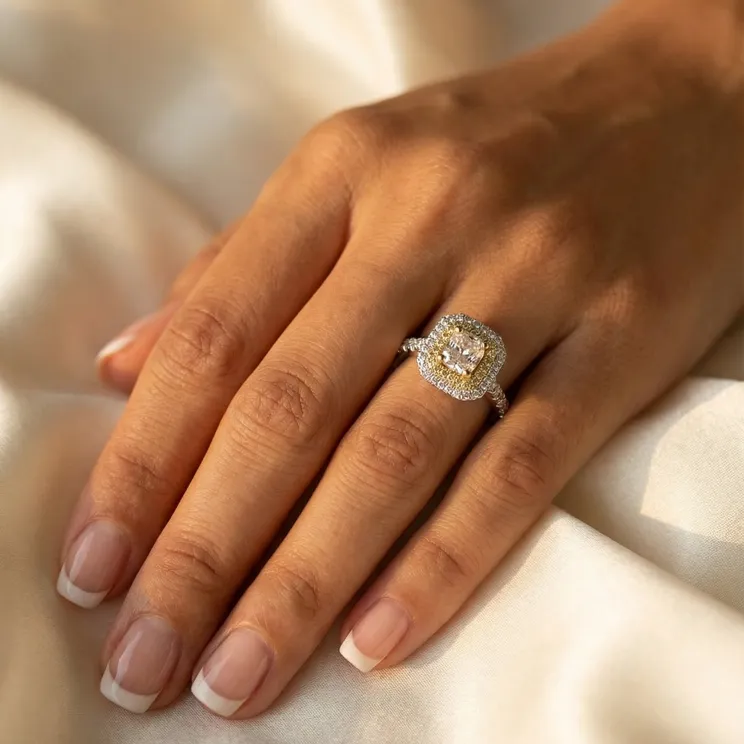
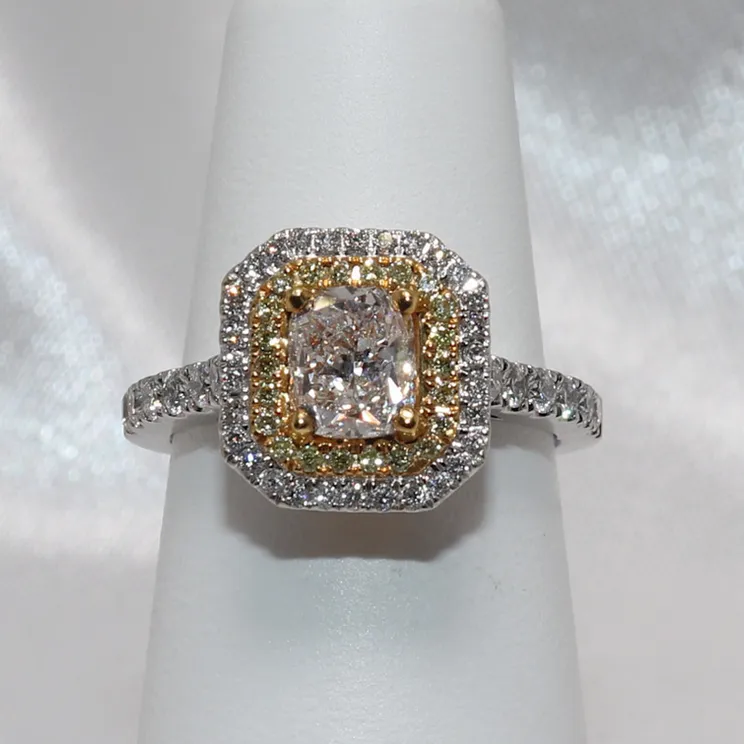
A yellow or rose gold band under a white gold or platinum head is a classic two-tone ring: the white metal keeps the diamond white and the colored band warms the hand. Engagement rings and wedding bands do not have to match. A rose band beside a white engagement ring is common now.
Comparing the four
- Color: yellow (warm), white (cool, bright), rose (pink), platinum (cool, soft grey-white).
- Plating: only white gold needs it.
- Hardness and wear: 14K harder than 18K; platinum the most durable in prongs, though it scratches to a patina.
- Weight: platinum heaviest; 14K gold lightest.
- Price: platinum and 18K at the top; 14K the most affordable.
- Skin: platinum and nickel-free white gold for sensitive skin.
Care by metal
All four clean the same way: warm water, a little mild soap and a soft brush, then rinse and dry. Keep every ring away from chlorine and household bleach, which attack gold alloys. Take rings off for the gym, gardening and heavy work. The full routine is in the jewelry care guide.
Cleaning and inspection are free for life on jewelry bought at Geraci; for other work the estimate is free and often done while you wait. See the repairs page.
Choosing in the store
Browse rings and engagement rings by metal online, each with its price. In the store, try the same setting in two metals against your skin under daylight. If you want a setting from the case in a different metal, we make it on-site; book a free consultation and we will quote it.
Frequently asked questions
Is 14K or 18K gold better for an engagement ring?
14K is harder and holds up better to daily wear; 18K has a richer color and costs more. Both are used for engagement rings. For a ring worn every day, 14K is the practical choice.
Why does white gold turn yellow?
White gold is yellow gold alloyed with white metals and plated with rhodium. The rhodium wears through over time and the warmer alloy underneath shows. Replating restores the white, and white gold rings bought at Geraci come with free rhodium plating, up to once a year, for life.
Is platinum better than white gold?
Platinum is naturally white, so it never needs plating, and it is denser and more durable in prongs. It costs more and shows scratches as a soft patina. White gold is lighter and less expensive and stays bright white as long as it is replated.
Which metal is best for sensitive skin?
Platinum, which is nearly pure and rarely causes a reaction. Some white gold alloys contain nickel; a nickel-free white gold is available for a custom ring.
From the case