Engagement rings · 4 minute read · October 2026
Engagement ring settings, explained
Solitaire, halo, hidden halo, three-stone and cathedral settings compared: how each one holds the stone and how it wears.
Book a bridal consultation
The setting is the part of the ring that holds the stone, and it decides how the diamond is seen, how it is protected, and how the ring wears. The same one-carat round diamond looks quiet in a bezel, bright in six prongs and larger in a halo. This guide covers the settings we make and set most, and what each one does.
Solitaire
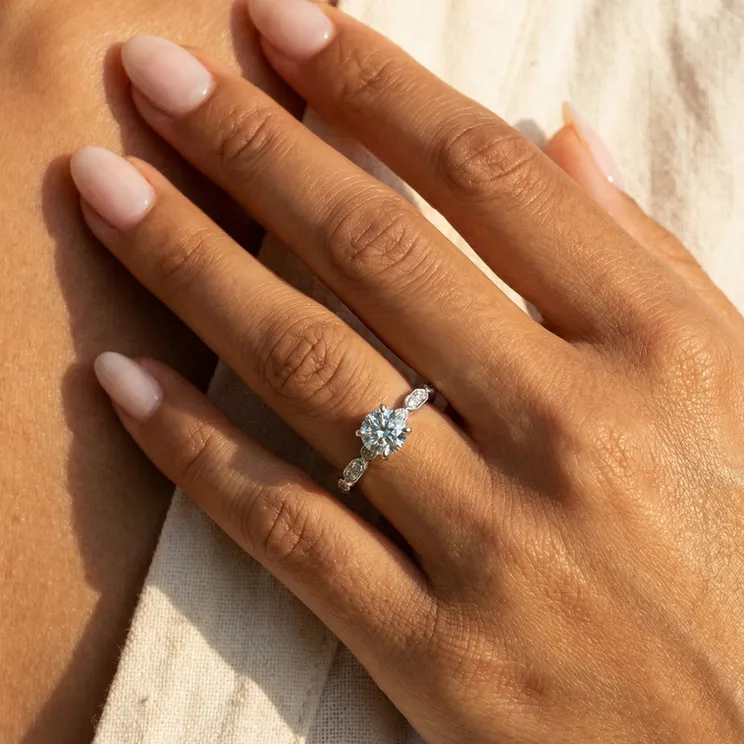
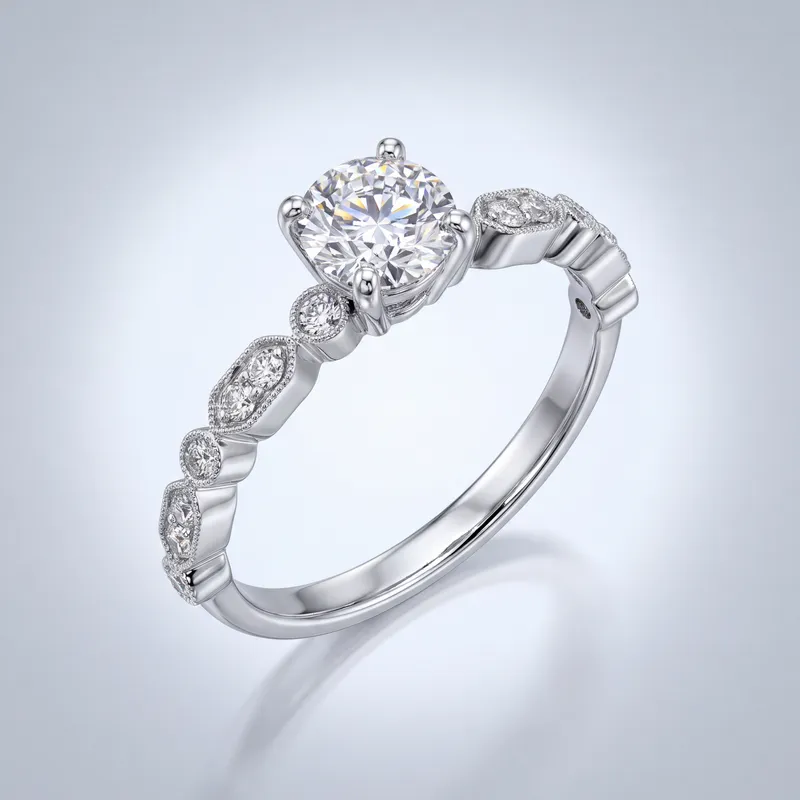
One stone, held by prongs on a plain band. The diamond does all the work, so cut quality matters most here. Four prongs show more of the stone; six prongs hold it more securely and make a round look rounder. The band can be thin or wide, rounded, flat or knife-edged.
A solitaire pairs with any wedding band, which is one reason it is the most common setting. See solitaire-style rings in the case.
Halo
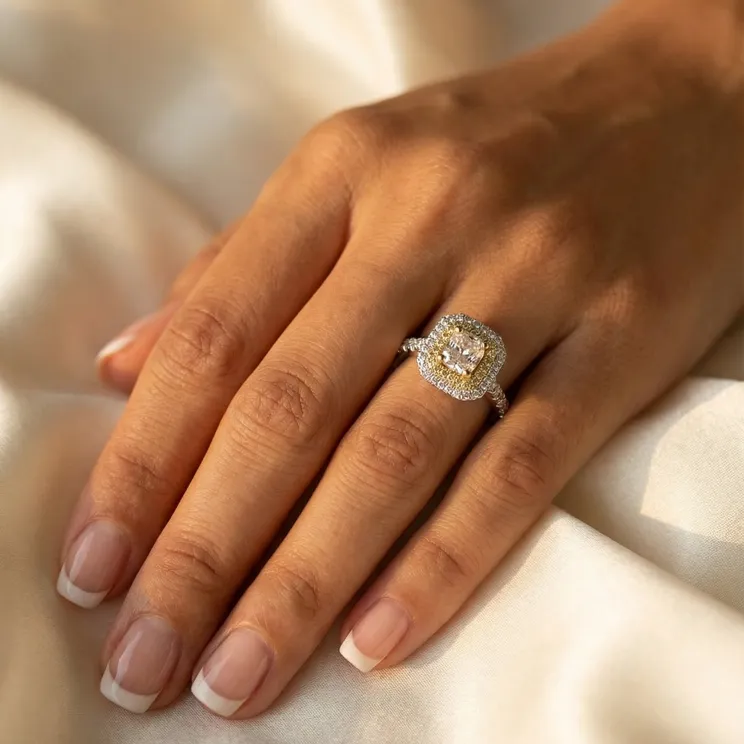
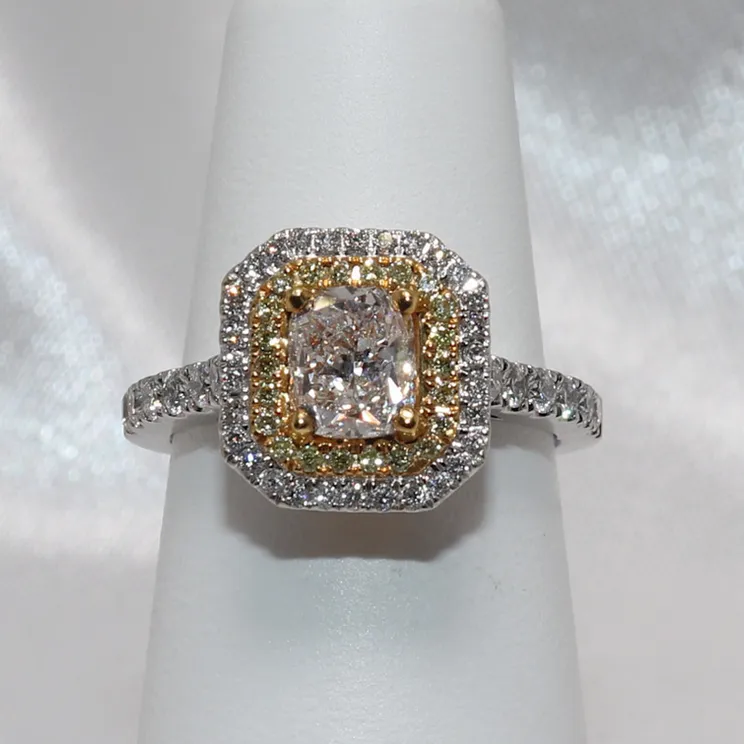
A ring of small diamonds around the center stone. It makes the center look larger from a distance, adds sparkle from every angle, and protects the edge of the stone. A halo follows the shape of the center: a round halo on a round, an oval halo on an oval. A double halo adds a second ring.
A halo ring needs a wedding band shaped to fit under it, or a straight band worn with a small gap. See halo rings.
Hidden halo
A ring of small diamonds under the center stone, around the base of the prongs. From above the ring looks like a solitaire; from the side it sparkles. It suits someone who wants a clean top view and a little more light.
Pave band
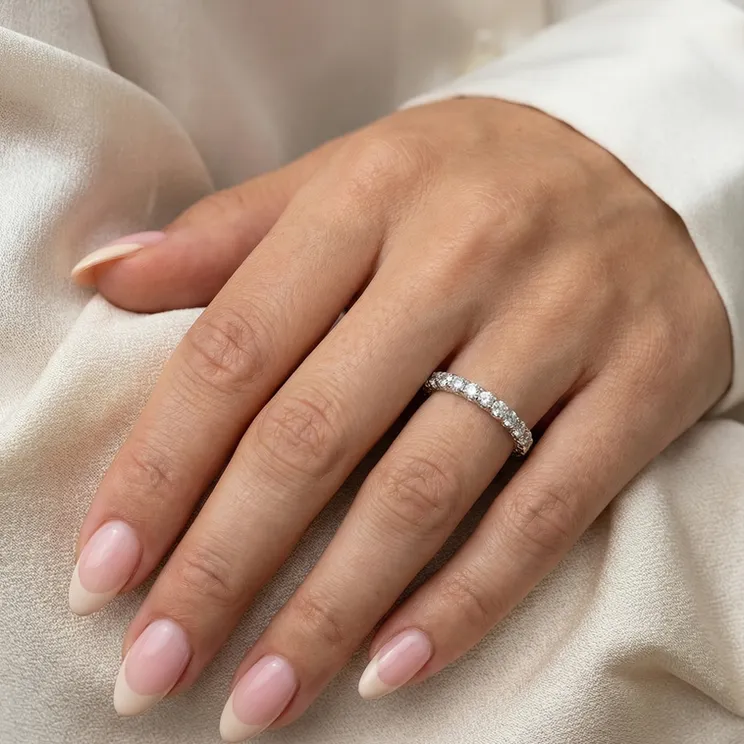
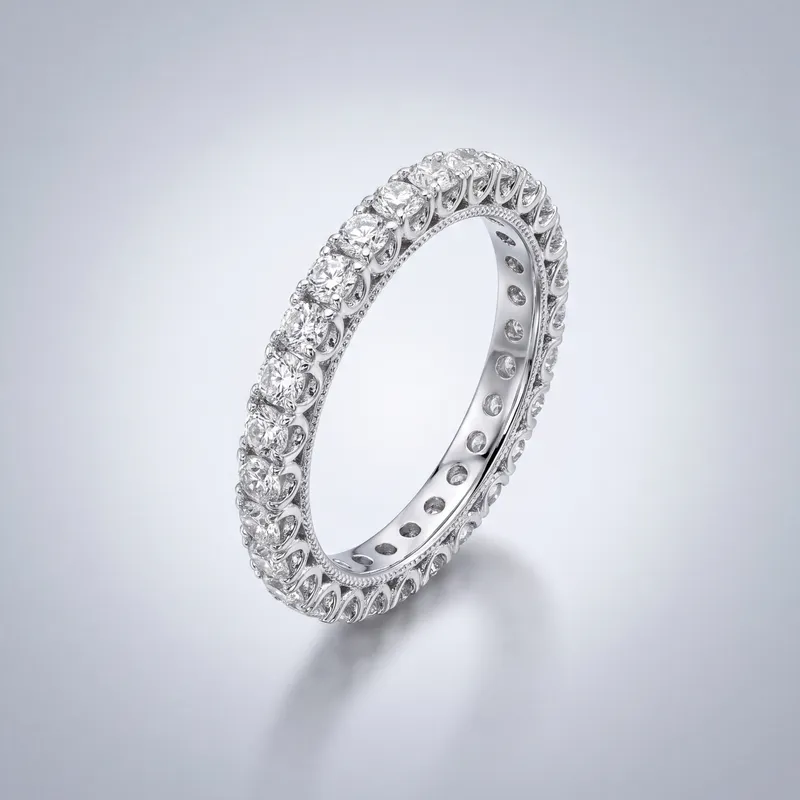
Small diamonds set into the band itself, held by tiny beads of metal so the surface reads as a line of light. A pave band pairs with a solitaire, a halo or a hidden halo. Micro-pave uses smaller stones and finer beads for a smoother line. Pave adds sparkle; it also adds small stones that can loosen, so the band should be checked once a year.
Three-stone
A center stone with a stone on each side, often the same shape in a smaller size, or a contrasting shape such as tapered baguettes or half-moons beside an emerald cut. The side stones add spread across the finger. Three-stone rings read traditional with rounds and modern with pears or baguettes.
Cathedral
A setting where the band rises in arches to meet the center stone, like a cathedral's buttresses. It lifts the stone, makes the ring look taller from the side, and gives the band and the head a single line. The stone sits higher, so a cathedral catches on gloves more than a low setting. See cathedral rings.
Bezel
A rim of metal that wraps the whole edge of the stone instead of prongs. The most secure setting and the one that snags least, which makes it the choice for hands that work. A full bezel hides a little of the stone's edge; a half bezel holds two sides and leaves the others open. The look is modern and clean.
Milgrain and vintage details
Milgrain is a row of tiny metal beads along an edge, a detail from rings made a hundred years ago. With engraving on the shank and filigree under the head it gives a ring an older look. Milgrain can be added to many settings. See milgrain rings.
Channel and bar settings
Rows of small diamonds set between two walls of metal (channel) or between short bars (bar set). Both hold side stones securely with no prongs to catch. They are used on bands more than on engagement ring heads.
The setting is what you touch every day. Try it on with the band you will wear next to it.
How to choose a setting
- Start with the stone's shape. Points and corners want prongs or a bezel over them; a round takes anything.
- Decide how much sparkle you want around the center: none (solitaire, bezel), some (hidden halo, pave band), a lot (halo, three-stone).
- Think about the hands. A bezel or a low solitaire for hands that work; a cathedral or halo for hands that do not catch on things.
- Choose the metal. White metal makes a white diamond look whiter; yellow and rose gold warm it. The ring metals guide compares them.
- Plan the wedding band at the same time. Halos and low solitaires often need a contoured band.
Prong shapes and heads
Within a prong setting there are choices that change the look. Round prongs are the standard; claw prongs taper to a point and show more stone; flat tab prongs read modern; a V-prong protects a corner or a tip. The head, the small basket that holds the stone, can be open at the sides to let light in or closed in a cup for a cleaner profile. A higher head lifts the stone and lets a band sit flush underneath; a lower head sits closer to the finger and catches less.
Prongs wear with the ring. A yearly check at the bench, free for life on rings bought at Geraci, catches a thin prong before a stone is lost.
Setting prices and the ring builder
The ring builder shows each setting with your chosen diamond shape on a hand and lists the price of the setting. The diamond is priced separately and chosen with you at the counter, where you can see stones side by side. If you want a setting changed, a different metal or a design that is not in the builder, book a free consultation and we will draw it; the steps are on the custom design page.
Frequently asked questions
What is the most secure engagement ring setting?
A bezel, where a rim of metal wraps the whole edge of the stone. Six prongs are more secure than four. Every setting is secure when the prongs are sound, which is why an inspection once a year matters more than the style.
What is a hidden halo?
A ring of small diamonds set under the center stone, around the base of the prongs, so it shows from the side and does not change the look from above. It adds sparkle without making the center look larger.
Which setting makes a diamond look bigger?
A halo. The ring of small diamonds around the center reads as part of the stone from a distance. A thin band and a white metal also make the center look larger by contrast.
Can I see settings before I visit?
Yes. The ring builder shows each setting with your diamond shape on a hand and lists the price of the setting. The diamond is chosen with you at the counter.
From the case