Engagement rings · 4 minute read · Updated November 2026
Diamond shapes, from round to pear
Round, oval, pear, emerald, cushion and more: how each diamond shape looks on the hand, and what to check before you buy.
Book a bridal consultation
Shape is the outline of a diamond seen from above, and it changes the look of a ring more than any other choice. Round is the classic and the brightest. Oval, pear and marquise look larger for their weight and lengthen the finger. Emerald and asscher are calm and architectural. This guide covers the shapes we set, how each one looks on the hand, and what to check before you buy one.
Shape is not cut. Cut is how well the facets are proportioned inside the outline; the 4Cs guide explains it. Every shape below can be cut well or badly.
Round brilliant
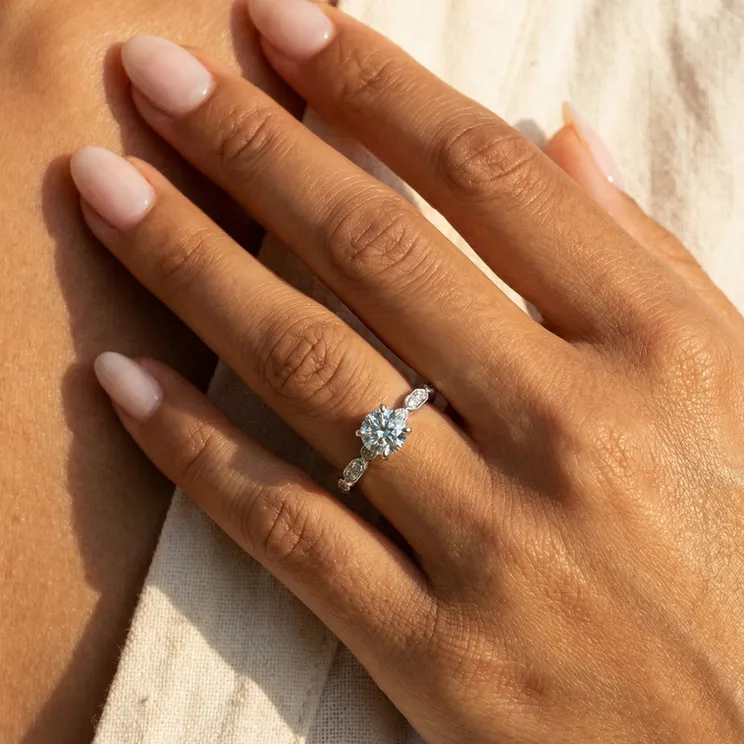
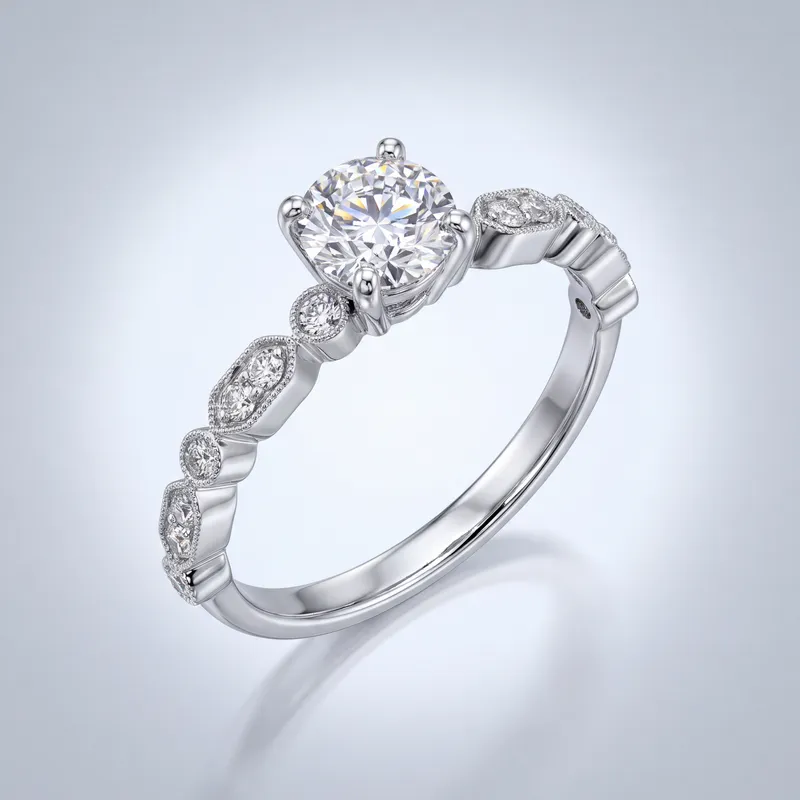
The round brilliant is the shape most engagement rings are built around. Its facet pattern returns more light than any other shape, which is why it sparkles the most and why it is the only shape with a cut grade on a grading report. It suits every setting, from a four-prong solitaire to a halo, and every finger.
It is also the most expensive shape per carat, because cutting a round wastes the most rough and demand is highest.
Oval
An oval is a stretched round with the same brilliant faceting, so it keeps most of the sparkle while looking larger for its weight. It lengthens the finger and sits well in a solitaire or a halo. Check the bow tie, the dark band across the middle of a fancy shape, which should be faint. Ovals vary in proportion from short and wide to long and slim; a ratio around 1.35 to 1.5 reads as a classic oval.
Cushion
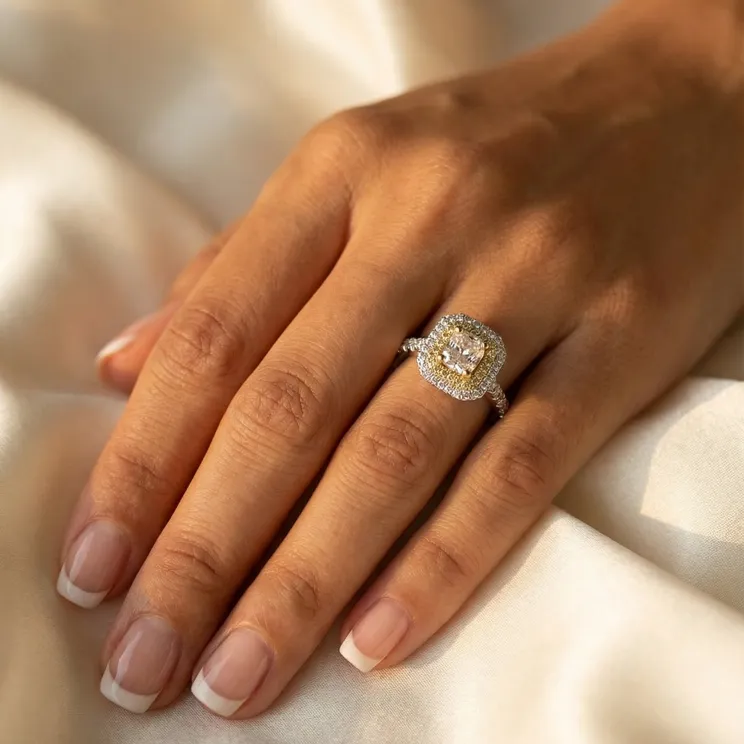
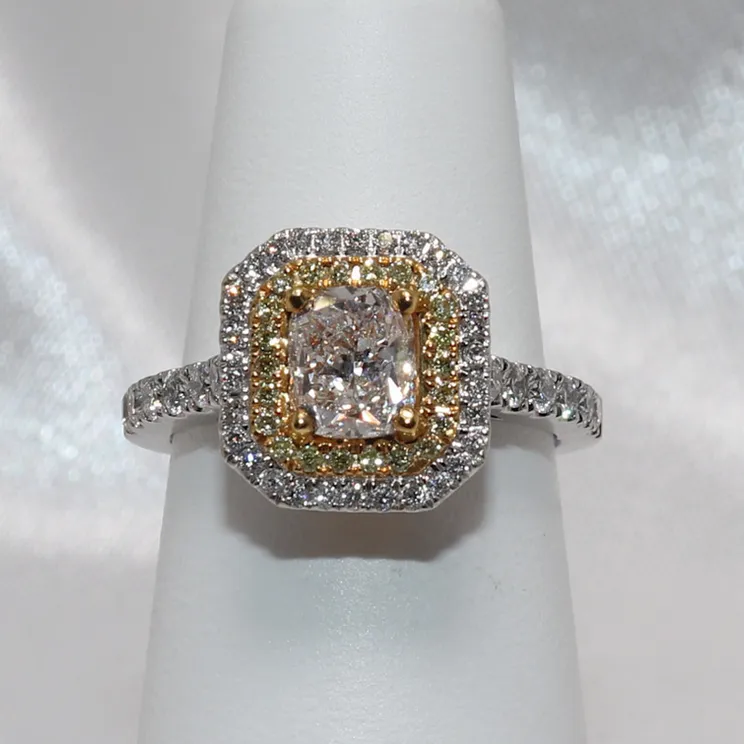
A cushion is a square or soft rectangle with rounded corners and a pillowy look. Older, chunkier cushions have larger facets and a flash-and-fire look; modern cushions are cut for sparkle. It is forgiving of color, so a cushion can be a step or two lower in color grade than a round without showing it.
Princess
A princess cut is a square brilliant with sharp corners. It gives the most sparkle of the square shapes and uses the rough efficiently, so it costs less per carat than a round. The corners are the fragile part and should sit under prongs.
Emerald
Emerald cut rings by custom design
An emerald cut is a rectangle with cut corners and long step facets. It does not sparkle; it flashes, with broad planes of light and dark, and it shows the clarity of the stone plainly because there is nowhere for an inclusion to hide. Choose a higher clarity grade here, VS1 or better. The clean lines suit a plain band or a slim pave band, and it reads quieter and more tailored than a brilliant shape.
Asscher
Asscher rings by custom design
The asscher is the square step cut, with a high crown and a small table that give the look of a hall of mirrors. Like the emerald cut it rewards clarity and calm settings. It is rarer in the case, and often a custom order.
Radiant
A radiant is a rectangle or square with cut corners and brilliant faceting: the outline of an emerald cut with the sparkle of a round. It hides inclusions well, holds color well, and the cut corners make it sturdier than a princess.
Pear
A pear, or teardrop, is rounded at one end and pointed at the other. Worn point toward the fingertip it lengthens the hand. The point is the fragile part and should sit in a V-shaped prong. Pears look large for their weight and carry a halo well.
Marquise
A marquise is pointed at both ends, the longest shape for its weight and the one that makes the finger look longest. Both points want protecting prongs, and the bow tie needs checking. It is a shape with a strong period feel that is back in fashion in a plain east-west or north-south solitaire.
Heart
A heart is a pear with a cleft at the rounded end. It needs to be over about half a carat for the shape to read clearly, and the two lobes should be even. Usually a custom order.
Try the top two shapes on the hand before you decide. A shape that reads one way loose reads another way set and worn.
How to choose a shape
- Decide whether you want sparkle or flash. Round, oval, cushion, princess, radiant, pear and marquise sparkle. Emerald and asscher flash.
- Decide how the stone should sit on the finger. Long shapes (oval, pear, marquise, emerald) lengthen; square shapes (cushion, princess, asscher) sit compact.
- Match the clarity grade to the shape. Step cuts show inclusions; brilliant cuts hide them.
- Protect the points. Princess, pear, marquise and heart want prongs over their corners and tips.
- Try two on. The ring builder shows each shape on a hand before you visit.
Setting the shape you choose
Every shape in the case is listed with its price on the engagement rings page. If the shape you want is not in the case, or you want it in a particular size or setting, book a free consultation. We source the stone, show it to you beside others, and set it on-site on Colerain Avenue; the process is on the custom design page.
Frequently asked questions
Which diamond shape looks the largest for its weight?
Oval, pear and marquise. They spread their weight across a longer face, so they look larger than a round diamond of the same carat. Round and cushion look the smallest for their weight.
Which diamond shape sparkles the most?
Round brilliant. Its 57 or 58 facets are arranged to return the most light, and it is the only shape with a cut grade on a grading report. Oval, cushion, pear and radiant are cut on the same brilliant pattern and come close.
What is the difference between emerald and asscher cuts?
Both are step cuts with long flat facets that show flashes rather than sparkle. Emerald is a rectangle with cut corners; asscher is the square version with a higher crown.
Does the shape change the price?
Yes. Round diamonds cost the most per carat because the cut wastes the most rough and demand is highest. Oval, cushion, pear and the other fancy shapes cost less for the same weight and grades.
From the case