Diamonds · 4 minute read · Updated November 2026
White gold diamond hoop earrings
White gold diamond hoop earrings: the styles in the case, how to choose a size, and how to keep white gold white.
Book a free consultation
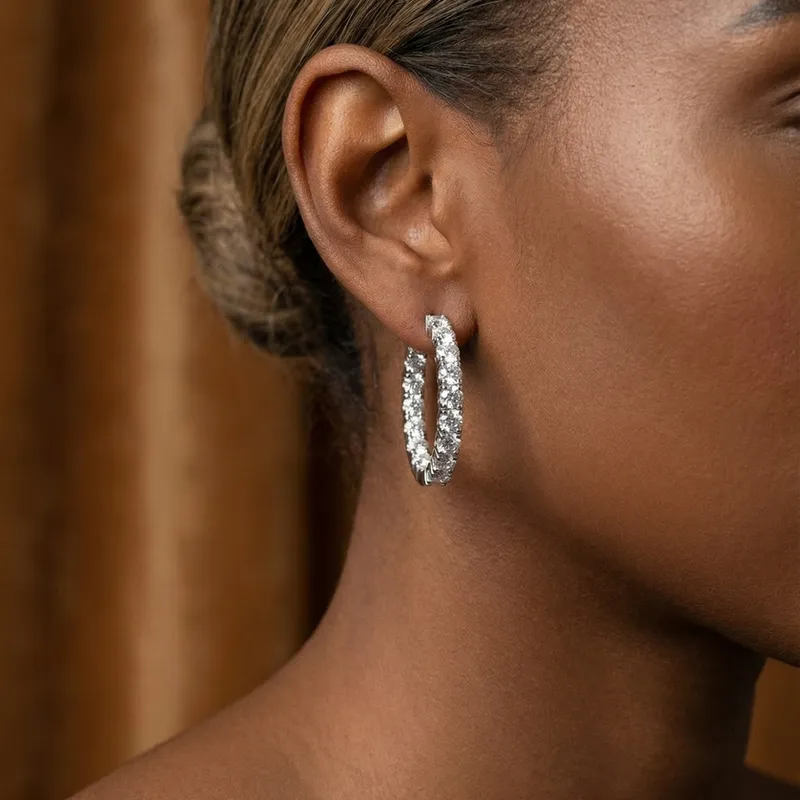
Diamond hoops in white gold are the earring that goes with everything. The metal disappears against the diamonds, so what shows is a ring of light on the ear. This guide covers the styles in the case now, how to choose a size, what to look for in the diamonds, and how to keep white gold white.
Styles in the case now
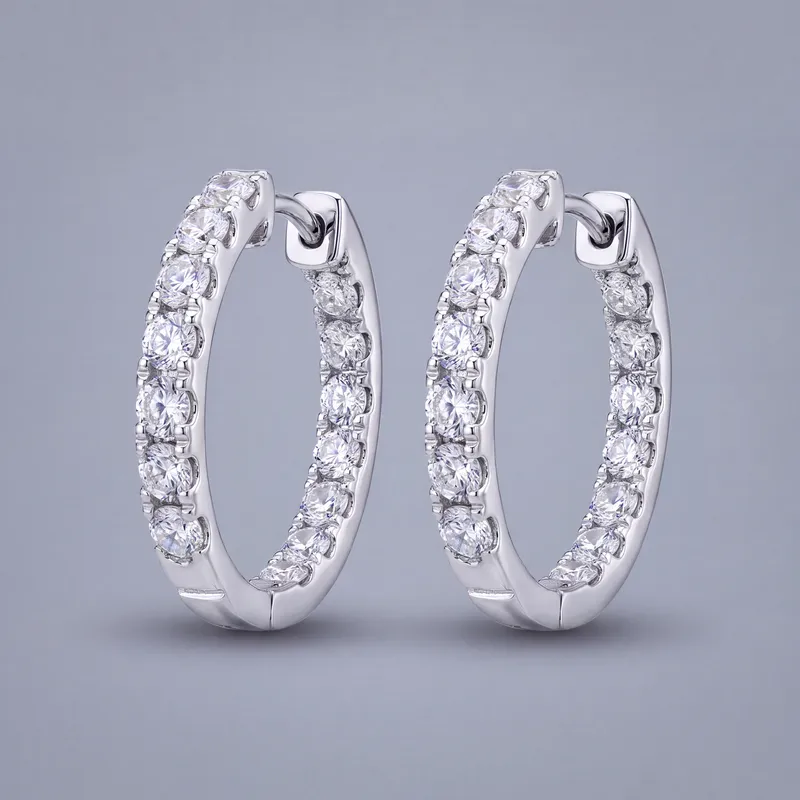
Inside-out hoops
Diamonds set on the outside of the hoop and continuing around the inside, so the earring sparkles from the front and from the side. The most popular diamond hoop, and the one people mean when they ask for diamond hoops.
Outside hoops
Diamonds on the front face only. Less sparkle from the side, more diamond for the price, since the stones are where you see them.
Huggies
Small hoops, usually 10 to 14 millimeters, that hug the lobe. A single row of diamonds or a plain gold band. The everyday pair that stays in.
Oval hoops
An elongated hoop that drops lower than a round one of the same width and lengthens the face.
Baguette hoops
Straight-cut baguette diamonds set end to end instead of round stones. A cleaner, more architectural line.
Lab-grown diamond hoops
The same styles set with lab-grown diamonds, which cost less than natural diamonds of the same grade. We set both; the lab-grown vs natural guide explains the difference.
See the diamond hoops in white gold now.
Choosing a size
Hoops are measured across the outside, in millimeters.
- 10 to 14 mm: huggies. Sit on the lobe. Every day, sleep included for many people.
- 15 to 25 mm: small to medium hoops. Clear the lobe and show from the front. Work, dinner, weekends.
- 30 to 40 mm: large hoops. A statement. Evenings and hair up.
- Over 40 mm: fashion hoops. Weight becomes the deciding factor.
Width matters as much as diameter. A thin hoop with one row of diamonds reads delicate at any size; a wide hoop with two or three rows reads bold.
Face shape is a small factor and taste is a large one. Round faces tend to suit oval or longer hoops; longer faces suit round or wider ones. Try both before deciding.
What to look for in the diamonds
Hoops use many small diamonds, so matching matters more than any one stone's grade. The stones should be the same size, the same white and the same brightness all the way around, with no dull or yellow stone breaking the line.
Cut quality in small diamonds shows as evenness of sparkle. Color G to I and clarity that is clean to the eye look identical to higher grades at earring distance. Spend on matching and on the setting, not on a clarity grade no one can see.
The setting should be prong or channel, and the prongs should be small and even. Shared-prong settings show the most diamond; channel settings protect the stones best.
Check the closure. A hinged post with a snap or a click closure is secure and easy to work one-handed. Diamond hoops are lost when the closure wears, so a firm click matters.
Buy hoops as a matched pair. Forty small diamonds that agree beat forty bigger ones that do not.
Keeping white gold white
White gold is yellow gold alloyed with white metals, then plated with rhodium for a bright white finish. Rhodium is hard but thin, and it wears where the earring rubs against skin and hair. When it wears through, the warmer alloy shows, more on 14K than on 18K.
Replating restores the original white. White gold rings bought at Geraci come with free rhodium plating, up to once a year, for life. Repair estimates for other white gold pieces are free.
Caring for diamond hoops
- Clean with warm water, a little mild soap and a soft brush, inside and out. Hairspray and lotion collect on the inner diamonds of inside-out hoops.
- Dry and store them clasped, as a pair, in their own compartment.
- Take them out for the gym, swimming and sleep if they are larger than huggies. Hoops catch.
- Check the hinge and the click. A closure that no longer snaps firmly needs a repair before the earring is lost.
- Have the settings checked once a year. On jewelry bought at Geraci, cleaning and inspection are free for life.
A worn hinge, a loose stone or rhodium that has worn through is a small repair, done on-site, and the estimate is free. See the repairs page.
Wearing them
Diamond hoops carry an outfit on their own, so keep the necklace simple or skip it. Hair up or pulled back shows the whole hoop; hair down softens it. With more than one piercing, small huggies above a larger hoop is the current look, and a pair of diamond huggies with a plain gold hoop mixes well.
See them on
Shop diamond hoops online, or visit the store at 9212 Colerain Avenue and try a few sizes on. If you want a specific diameter, row count or carat weight, book a free consultation and we will make the pair on-site.
Frequently asked questions
What are inside-out diamond hoops?
Hoops with diamonds set on the outside of the hoop and continuing around the inside, so the sparkle shows from the front and from the side. Hoops with diamonds on the outside only show their stones from the front.
Why does white gold turn yellow?
White gold is yellow gold alloyed with white metals and then plated with rhodium, a bright white metal. The rhodium wears through over time and the warmer alloy underneath shows. Replating restores the white. White gold rings bought at Geraci come with free rhodium plating, up to once a year, for life.
What size diamond hoops are best for everyday wear?
Hoops from about 12 to 20 millimeters across sit close to the ear, do not catch on collars and work with everything. Larger hoops are for evenings and for hair worn up.
From the case